- Home
- About Us
- Join/Renew
- Member Benefits
- Member Pages
- Log In|Log Out
- Log In
- Log Out
- Help
- Museum Store
Kevin,
Handle out is non freewheeling. If it is in freewheeling, when you let off the gas, the car will coast freely. In non freewheeling you will feel engine braking. Do you have an owner’s manual? They are available on the website under publications.
Kurt,
One possibility is a Lock and Stitch repair. They are located in California, but you might check and see if they have licensed the process to a machine shop near you, or you can ship it. I had a ’29 Buick OHV head that had a combustion chamber crack repaired using this method 25 years ago and it is still going strong. It was done at a local machine shop. https://www.locknstitch.com/
There are videos on youtube showing the process. I know of many people that have used it successfully.
Someone may also speak up that has a spare head.
I would like to get the car assigned to your record, any chance you can send me the serial number? Click on my name on this post and it should give you my e-mail.
Dave
Joe,
Check with John Cislak. He’s in the Member Roster.
Dave
The Webmaster is working to get the 1930 Parts Manual posted on the website as it is the last one to have diagrams. Others will follow down the road.
If anyone is looking for a specific year digital Parts Manual, contact me and I will get it to you. The Manuals from 1931 on do not have diagrams.
PASB @Pierce-Arrow.org
Joe, If the Dropbox doesn’t work for some reason, let me know and I will try the WeTransfer.
Carl, There is not currently a link to this material on the website. The main issue is file size and storage space. These are very large files. I would like to make this stuff available on our site eventually. It is available at the AACA Library. The next step is to get a list of PAS materials at AACA on our website. Right now if someone posts on the Message Board looking for a Parts Manual, if I have it, I will contact them.
I will need your e-mail address which I can get off the website. I upload the file along with your e-mail address to a service. Once the file is uploaded, the service sends you an e-mail with a login to retrieve the file. It is around 400MB I think, so it takes a while to download unless you have very fast internet. This will be the same scan that is at the AACA Library.
Joe,
If you can’t get the parts manual otherwise, I can get a digital copy to you. It is too large a file to e-mail and would have to be done using a file transfer site.
Dave
Ben,
The PAS record shows the original owner as Tucker, but that information could have come from anyone and is not documented. The Weis files have: (formerly owned by Preston Tucker??) , so again no positive documentation. It is possible you could go to the appropriate state DMV to see if original registration is available, however it is increasingly difficult to get this information with all the privacy laws. There are also some older DMV records available online.
That car is still on your grandfather’s record. Are you the current owner? If so I will move it to you.
Dave
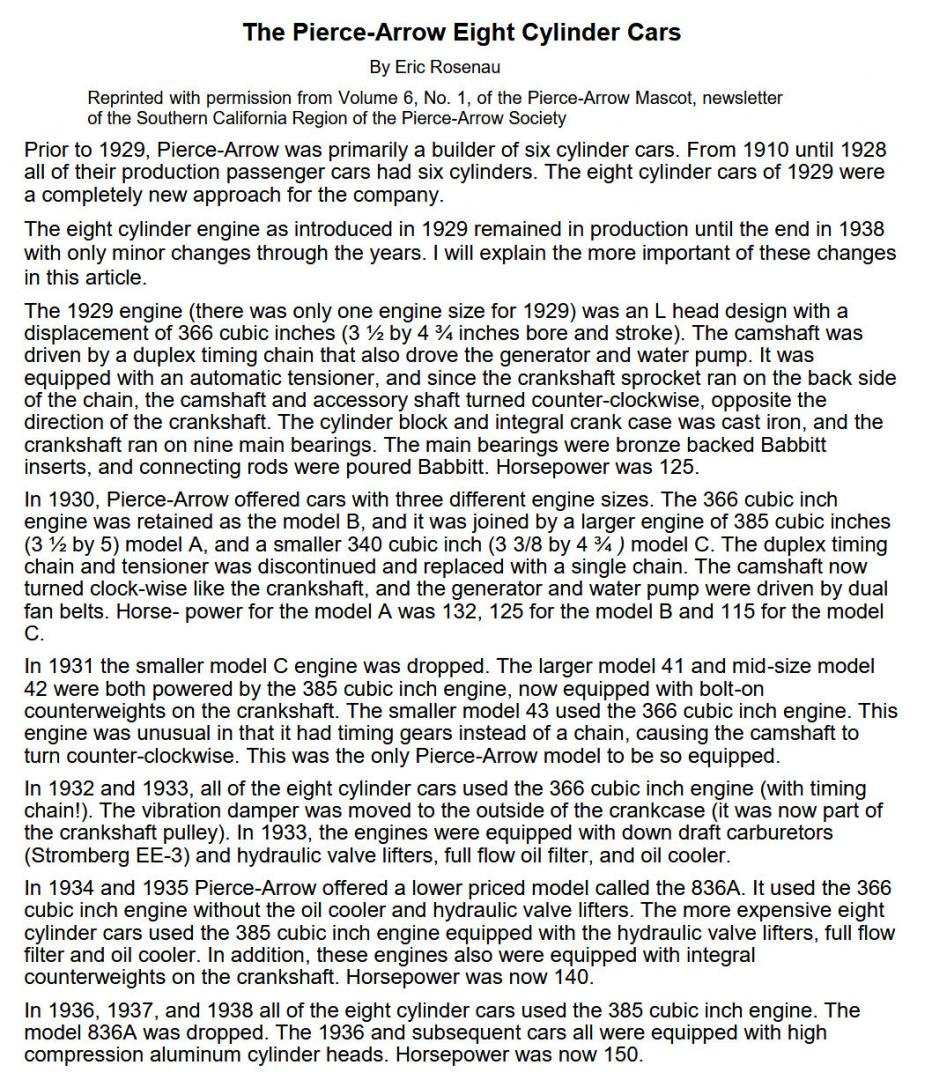
Below is a description of the evolution of the Pierce-Arrow 8 cylinder engine from one of our Service Bulletins.
Hi Brandon,
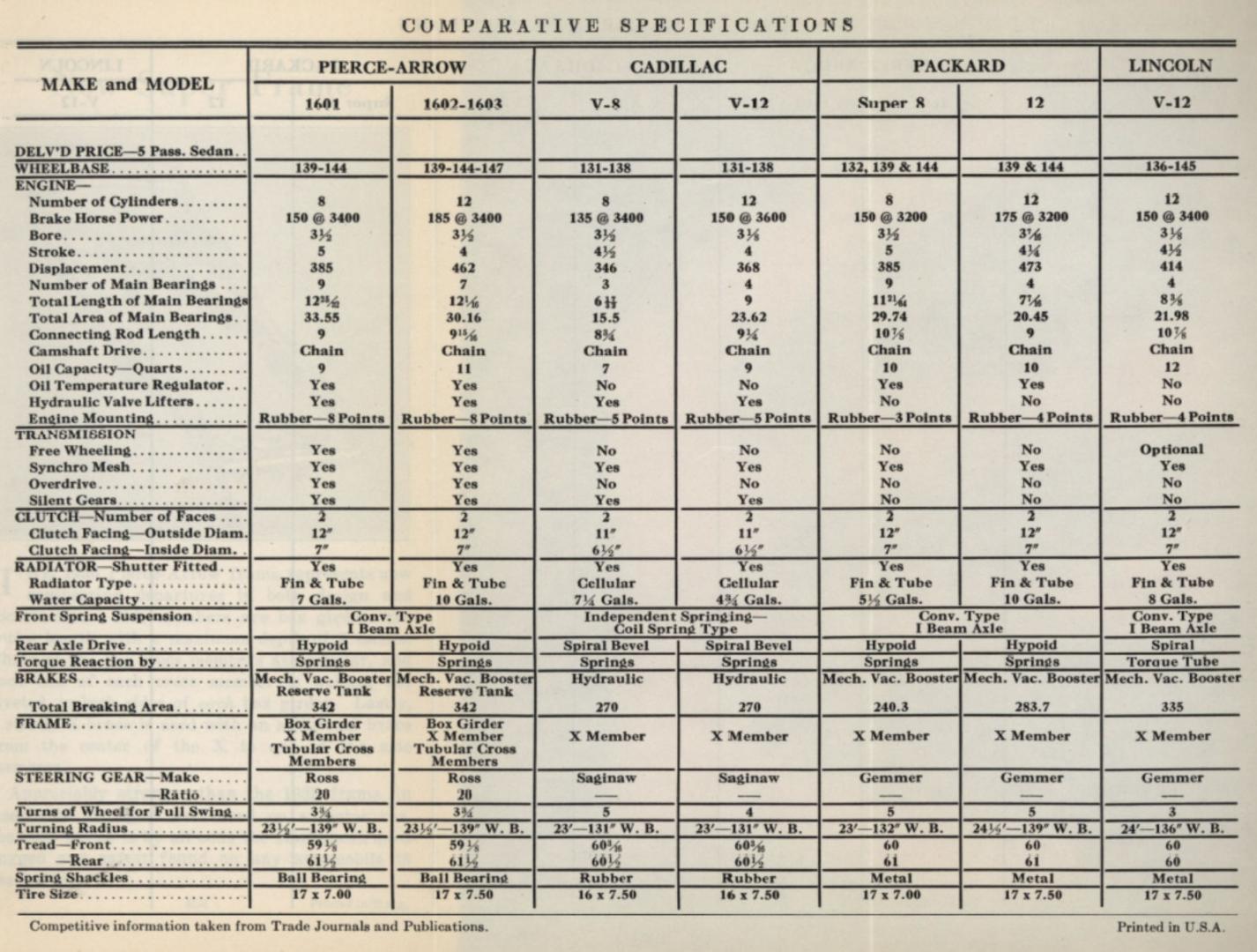
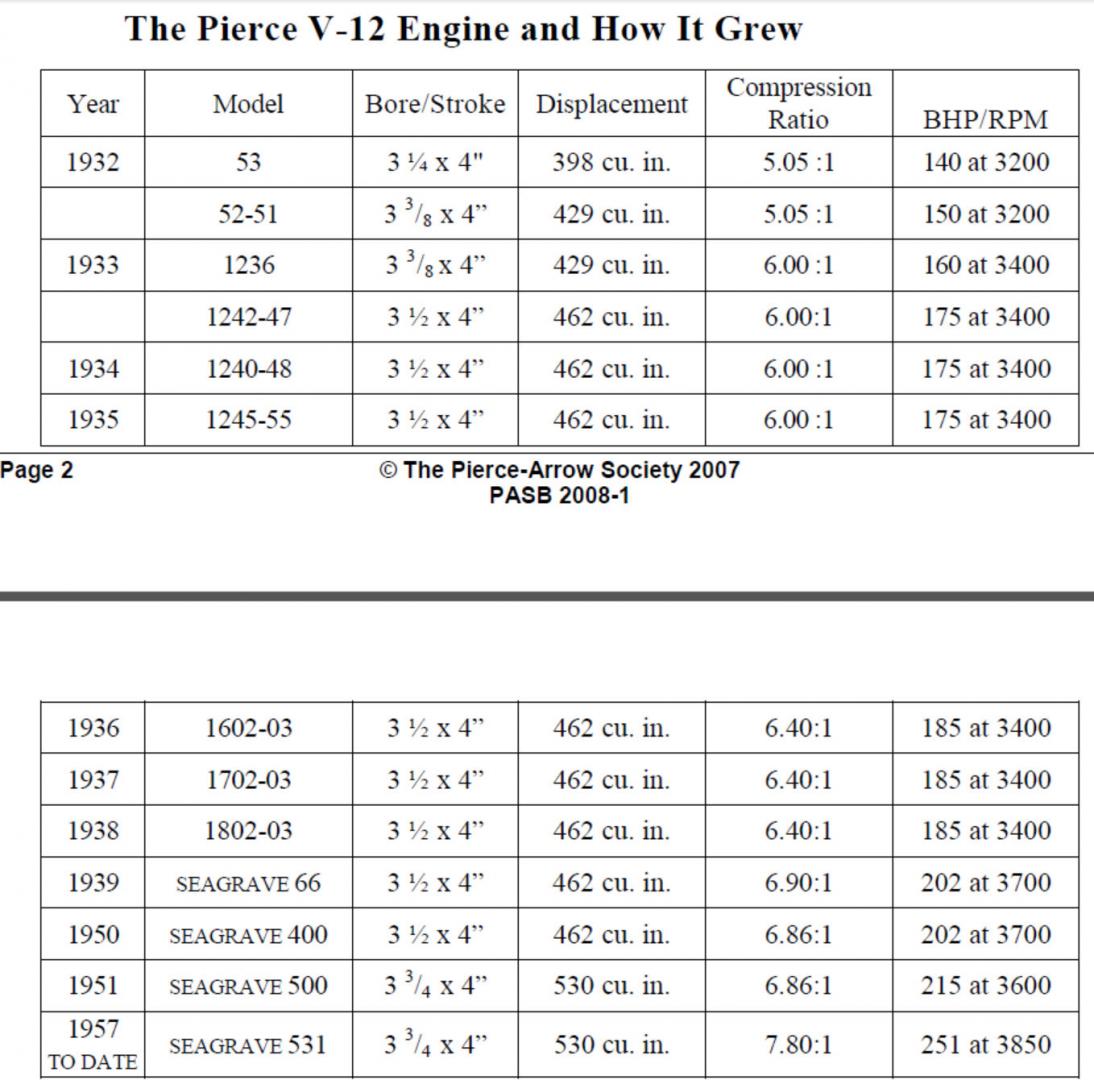
Below is some information on the Pierce-Arrow 12 and a comparison of the 1936 Pierce-Arrow with some other luxury makes. I am not a Pierce 8 owner, so hopefully some other members will provide answers to your questions. The ’36-’38 Pierce-Arrows are generally regarded as the best driving P-As, although earlier ones are still very nice cars and fun to drive. In any given year, Pierce-Arrow was at the top of the field.
The 8 cylinder engines started at 125 horsepower in 1929 and ended at 150 horsepower in 1938. There was a 115 hp model in 1930. There were 3 displacements, 340 cu. in., 366 cu in. and 385 cu.in. The chart below lists the various 12 cylinder versions. The 12s do have more power, but the 8s are capable cars.
I hope this helps you make a decision. While I may be biased, I highly recommend Pierce-Arrow.
Thanks Randy. I have added a link to the Metro Rubber pads to the Parts and Services Directory under Rubber Parts.
The plan is to have the meet in the Carson Valley of Nevada. A committee has been formed and finding a suitable hotel available in the appropriate timeline is the first order of business. The hope is to have the meet this time next year. As soon as things are firmed up, the information will be posted.
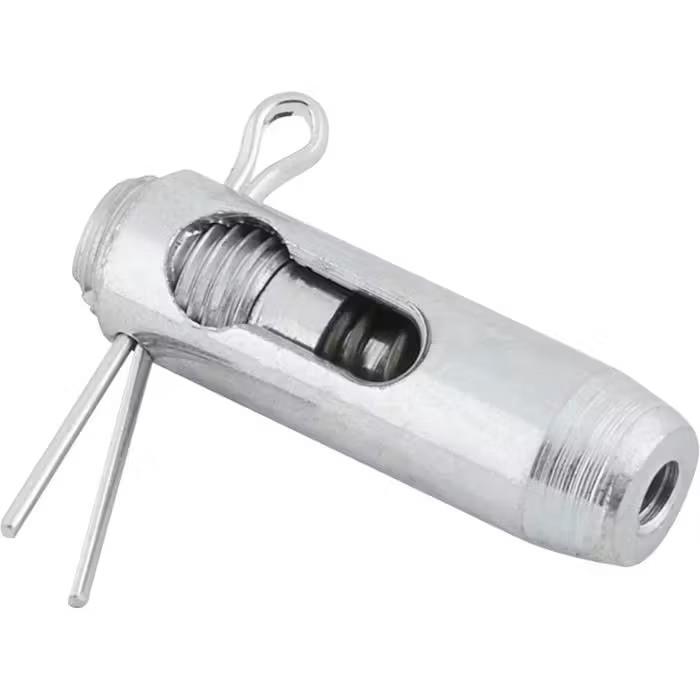
Unless I am not seeing something, a throttle rod end. A variation of below:
William,
If you check the thread below yours, 1931 Pierce-Arrow information, there is a post on weights for the 1931 cars. They should be roughly similar to 1932 for the 8 cylinder cars. I am at the PAS meet right now, when I get home next week, I will check and see if I have a 1932 Dealer Data Book with ’32 weights.
Dave
Jim,
One other thing you might consider to prevent cooling system corrosion is running with a zinc or magnesium anode in the cooling system. Many people hang them in the radiator neck. There are some made that will thread into the block or radiator drain hole. Magnesium works best in fresh water, but Zinc will also work.
Dave
Jim,
I contacted PerRay that used to make Pencool and they no longer make it. Right now I am using No-Rosion. NAPA also has a Water Pump Lubricant / Anti Rust available. I haven’t heard good or bad about either. NoRosion specifically gives a dosage for straight water. https://www.norosion.com/norosioncoolant.htm
LubeGard has a diesel truck anti-corrosive additive, but does not mention use with water only. More research is required.
Dave
Herb,
They found a cracked fitting on the suction side of the fuel pump that was allowing air to be pulled into the fuel system. It showed up when they blew out the fuel lines.
Dave
Mike,
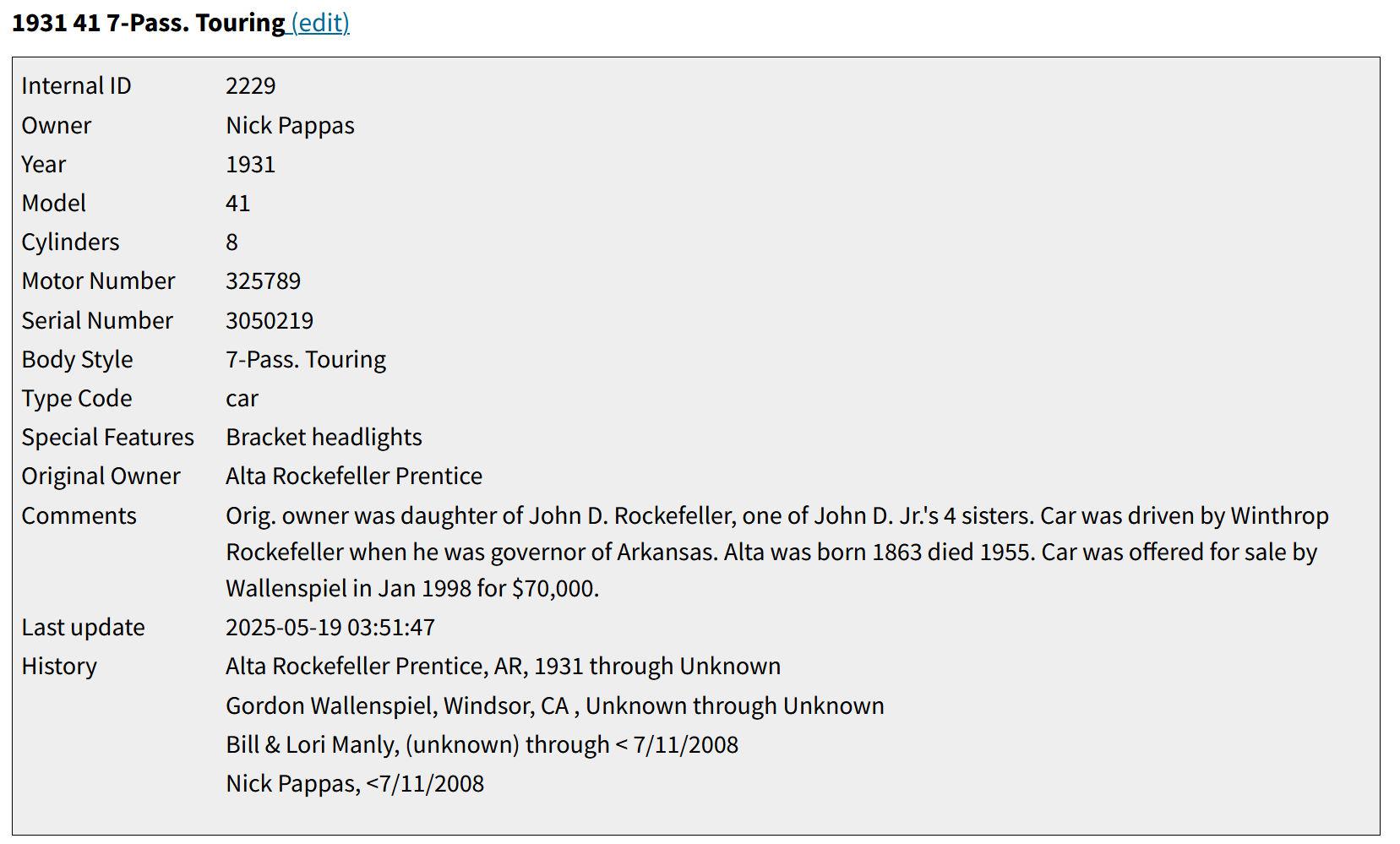
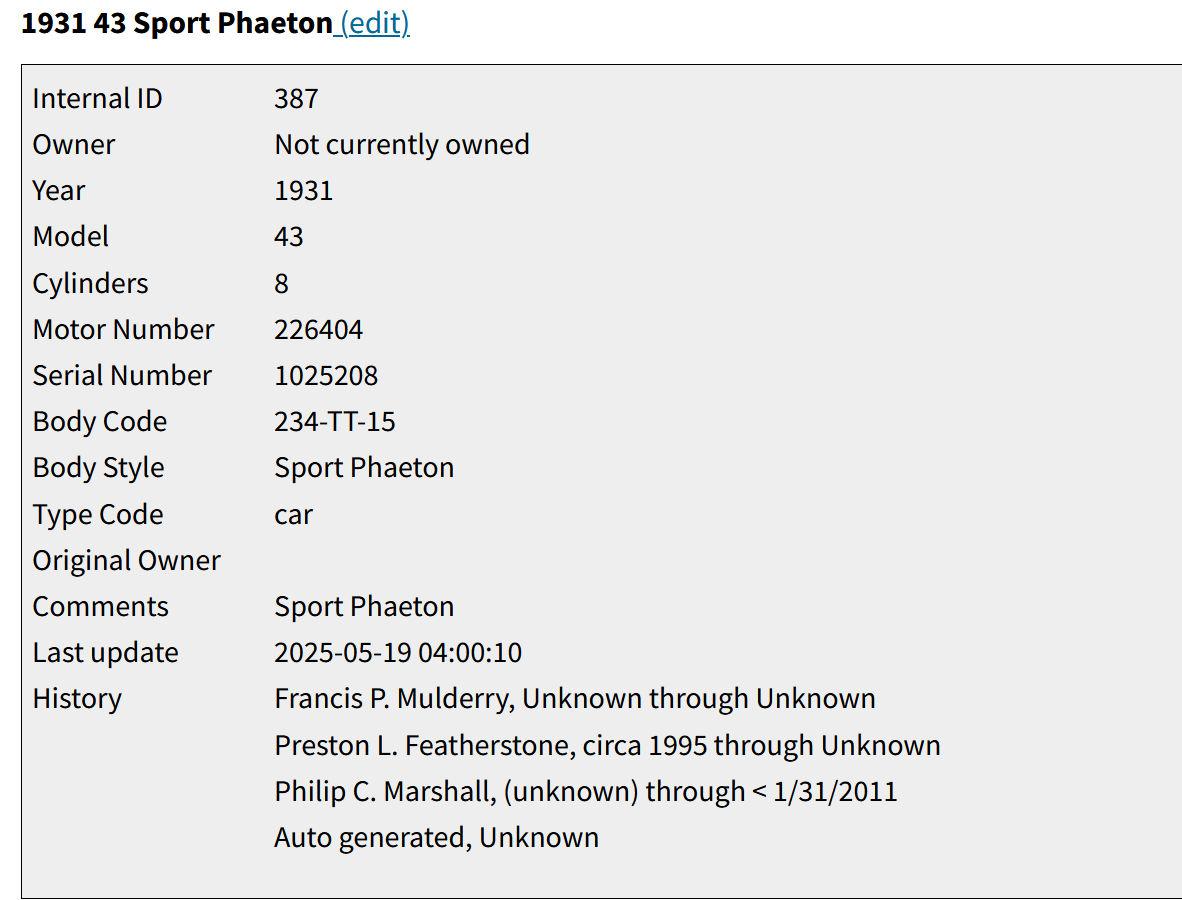
Below is what PAS records have on the cars. We do not have the current owner for either car. Any recent owner information you could provide us would be appreciated. You can e-mail me at [email protected]
Our records show 6 Model 41 & ps. Tourings exist with one in Norway and one in Thailand. Eight of the Model 43 exist. We have no information on the number built.
Dave
Arnold.
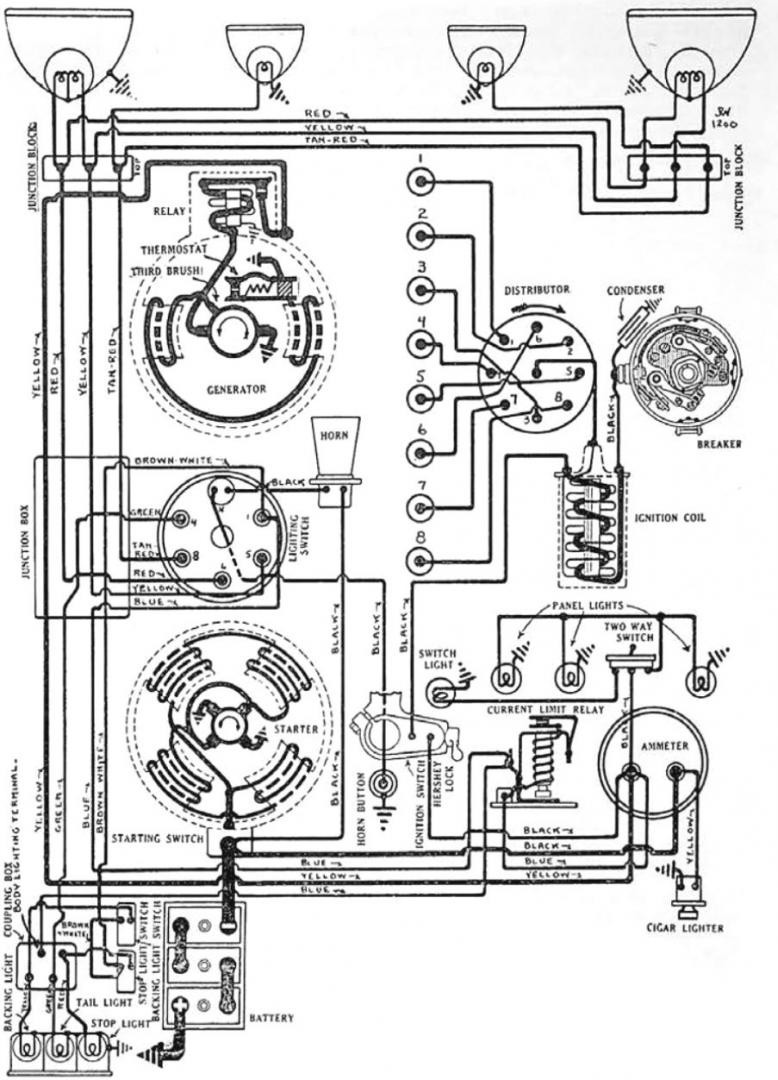
The Wiring and Tune up Guide has a wiring diagram including the Light Switch. If you want, you can download the guide from the PAS Website; Member Pages / Publications and Tech/ Operations and Service manuals. See below:
I hope this helps. I want a ride in the car at Eureka Springs.
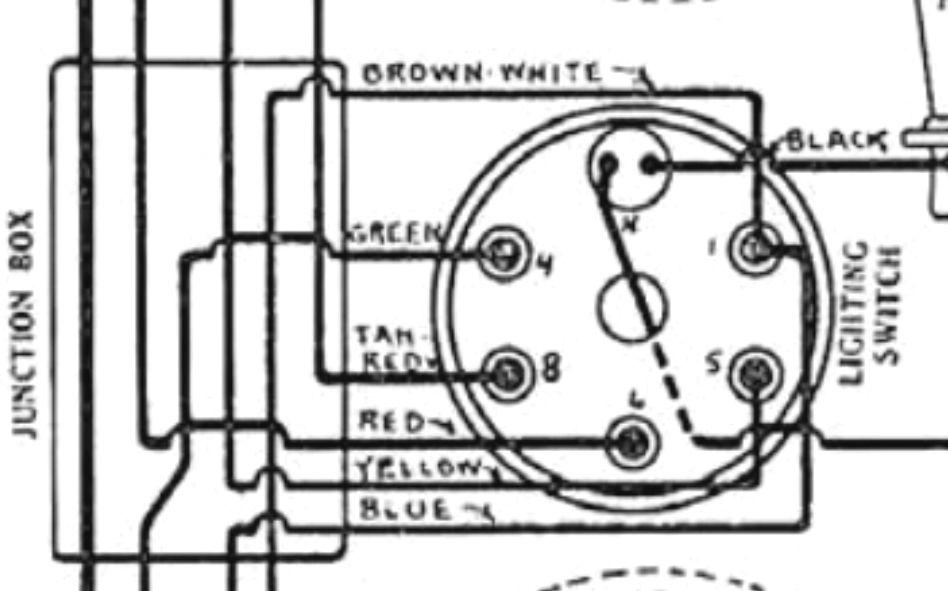
1 -Stop Light Switch, Brown/White
and Current Limit Relay, Blue
4- Tail light, Green
5 – Headlight, Yellow
6 – Headlight , Red
8 – Parking Lights, Tan / Red
H – (Double)- Horn and Ground, Black
Al,
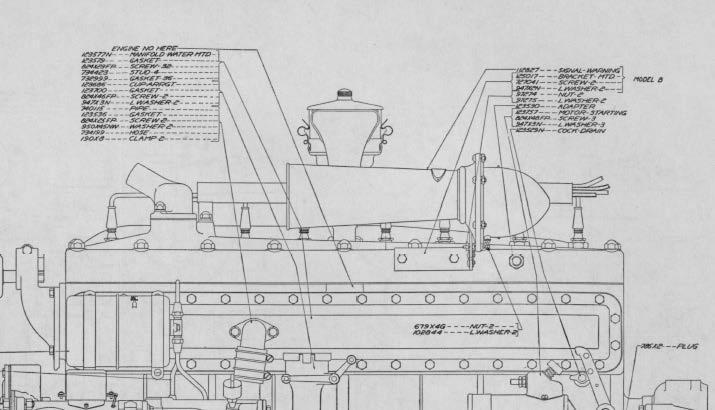
Below is a drawing out of the 1930 Parts Manual. 1931 does not have any drawings. I looked for some ’31 photos but don’t seem to have any. Hopefully a ’31 owner will contact you. If not, you can do a search for 1931 42 in the vehicle roster and this will give you some owners you could contact.
What information are you looking for on the oil filter?